The Disappearing Translators: How Budget Cuts Are Erasing the Scientists Who Connect Research to Real Life
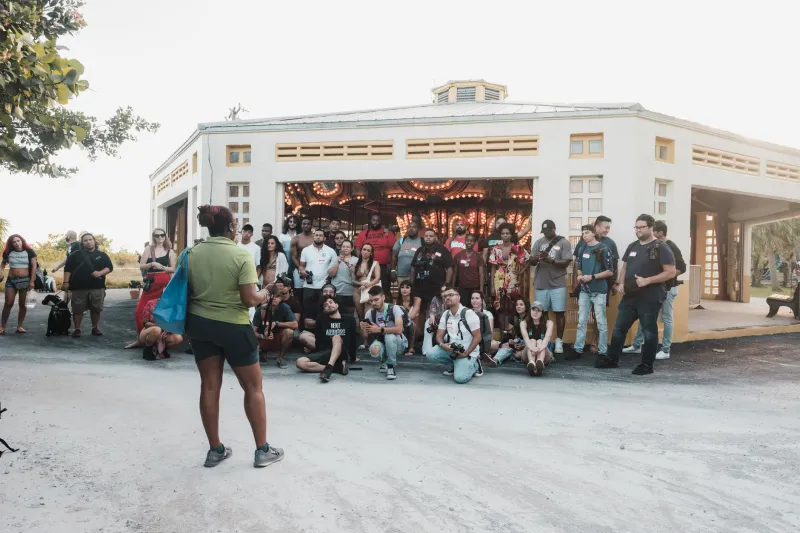
There is a particular kind of scientist that most people never hear about. They are not the celebrated principal investigators whose names appear on landmark studies, nor are they the early-career postdoctoral researchers grinding toward their first independent grant. They occupy a quieter middle ground—experienced enough to understand the full depth of a research field, yet still deeply invested in explaining what that research means to the people outside the university walls. They are the translators of science, and they are vanishing.
Across the United States, a slow-moving institutional crisis is eliminating this critical layer of the scientific workforce. Shrinking state appropriations, stagnating federal research budgets, and the rising administrative costs of running major research universities have forced department chairs and deans into a grim calculus: when cuts must be made, mid-career research scientists and science communicators are among the first to go. The consequences of these decisions extend well beyond any single campus, reshaping the relationship between scientific expertise and the communities that depend on it.
The Anatomy of a Budget Cut
University budget pressures are not new, but their current intensity is striking. According to data from the State Higher Education Executive Officers Association, inflation-adjusted state funding per full-time student remains significantly below its pre-2008 levels at most public institutions. Many flagship research universities have responded by aggressively pursuing private philanthropy and industry partnerships—a strategy that tends to favor high-prestige, high-visibility research over the slower, community-facing work that mid-career scientists often perform.
The positions most vulnerable in this environment are what administrators sometimes call "soft-money" roles: positions funded not through stable institutional lines but through a patchwork of grants, contracts, and program-specific allocations. Mid-career researchers—those typically between eight and twenty years past their doctoral degrees—frequently hold exactly these kinds of appointments. They have aged out of the postdoctoral pipeline's temporary protections but have not yet accumulated the grant portfolios or endowed chairs that insulate senior faculty from institutional turbulence.
When a grant expires or a funded program concludes, these scientists are often simply gone. There is no tenure to protect them, no departmental line to absorb them. Their expertise, their community relationships, and their hard-won ability to translate technical knowledge into accessible language disappear with them.
Why the Middle Layer Matters
To understand what is lost when mid-career scientists are cut, it helps to understand what they actually do. At land-grant universities, extension researchers have spent decades building trust with farming communities, translating agricultural science into practical guidance that reaches rural households far from any research library. At urban public health schools, mid-career scientists often serve as the primary conduit between epidemiological findings and the community health workers who apply them in neighborhoods with the highest disease burden. In environmental science programs, experienced researchers frequently maintain the long-term monitoring relationships with Indigenous communities and rural municipalities that produce the longitudinal data no short-term grant can fund.
This work is not glamorous by academic standards. It rarely generates the high-impact journal publications that drive institutional prestige metrics. It does not attract the kinds of philanthropic gifts that fund named professorships. But it is precisely this work—patient, relational, contextually sophisticated—that determines whether scientific knowledge actually circulates beyond the boundaries of elite institutions.
The scientists who do it are not interchangeable with junior researchers or volunteer science communicators. Their effectiveness depends on years of accumulated credibility, disciplinary depth, and community trust. When a mid-career public health researcher who has spent a decade building relationships with a particular rural county's health department is eliminated from a university's payroll, that county does not simply find a replacement. The relationship ends. The knowledge transfer stops.
A Geography of Loss
The damage is not evenly distributed. Elite private research universities, cushioned by large endowments and robust development offices, have largely been able to protect their research staffing. The institutions absorbing the deepest cuts are overwhelmingly regional public universities and historically Black colleges and universities—the institutions that have historically served as the primary scientific resources for communities with the least access to other knowledge infrastructure.
This creates a geography of scientific disinvestment that maps with uncomfortable precision onto existing inequalities. Rural communities in states with chronically underfunded public university systems are losing their most accessible points of contact with scientific expertise. Majority-minority communities that have relied on HBCUs and regional comprehensives as trusted sources of health and environmental information are watching those institutional capacities erode. The knowledge barrier does not simply remain in place; it actively widens as the human infrastructure on one side of it is systematically removed.
Alternative Models Worth Examining
Some institutions and funding bodies are experimenting with structural responses to this problem, and their early results offer cautious encouragement.
Several states have expanded cooperative extension funding models beyond agriculture, creating stable institutional lines for community-facing researchers in public health, environmental science, and technology access. These positions are shielded from the grant-cycle volatility that makes soft-money roles so precarious, precisely because they are funded through dedicated legislative appropriations rather than competitive federal grants.
At the federal level, the National Institutes of Health's Community Engagement Research Programs and the National Science Foundation's Broader Impacts requirements have pushed some funding toward the translational work that mid-career scientists perform. Advocates argue, however, that these mechanisms remain insufficient—that so long as Broader Impacts is treated as a checkbox rather than a genuine funding priority, the structural incentive to eliminate community-facing positions will persist.
Philanthropic funders have also begun to recognize the gap. Initiatives like the Robert Wood Johnson Foundation's commitment to community health research infrastructure and various regional science philanthropy efforts have attempted to provide the stable, multi-year support that allows mid-career researchers to maintain long-term community relationships. The scale of these efforts, however, remains far smaller than the scale of the problem.
Perhaps the most promising structural reform involves rethinking how universities count and reward translational work in promotion and tenure decisions. As long as community engagement and science communication are treated as service obligations rather than scholarly contributions, the institutional incentive to invest in the scientists who perform them will remain weak. A growing coalition of academic reformers is pushing for evaluation frameworks that treat public knowledge translation as a legitimate form of scholarly production—a change that would not only protect existing positions but encourage a new generation of scientists to develop these skills.
The Cost of Continuing
The elimination of mid-career scientists from America's research universities is rarely announced as a policy decision. It happens incrementally, through individual budget cycles and quiet non-renewals, in ways that produce no single headline and no obvious villain. But the cumulative effect is a structural withdrawal of scientific expertise from the communities that most need it—a slow-motion dismantling of the human infrastructure that makes open science meaningful in practice rather than merely in principle.
Open access to journal articles matters. Preprint servers matter. Data-sharing mandates matter. But none of these mechanisms can substitute for the experienced, trusted, community-embedded scientists who know how to make research findings legible and actionable for the people who did not attend graduate school and do not subscribe to academic databases. When those scientists disappear, the knowledge barrier does not simply remain—it hardens, and the communities on the far side of it are left further behind.
Restoring this layer of scientific infrastructure will require deliberate investment, institutional reform, and a genuine reckoning with the values embedded in how universities allocate resources. The alternative is a scientific enterprise that speaks fluently to itself and falls silent precisely when the rest of the country most needs to hear from it.