Public Records, Private Science: How FOIA Requests Are Becoming a Weapon Against Research Gatekeeping
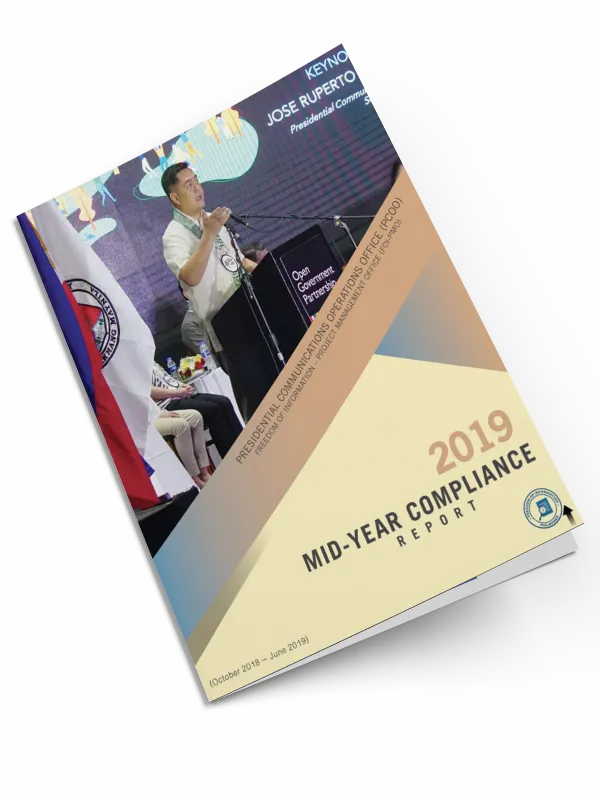
Photo: The government of the Republic of the Philippines., Public domain, via Wikimedia Commons
A Law Built for Democracy, Repurposed for Discovery
The Freedom of Information Act was signed into law in 1966 with a straightforward democratic premise: the American public has a right to know what its government is doing. For decades, journalists, lawyers, and activists used FOIA primarily to expose political misconduct, government waste, and institutional overreach. Few people imagined it would one day become a tool for reclaiming scientific knowledge.
Yet that is precisely what is happening. A growing cohort of researchers, open-access advocates, and citizen scientists has recognized that FOIA — and its state-level equivalents, commonly called "sunshine laws" — can compel federal agencies to release research data, correspondence, and study results that would otherwise remain inaccessible behind paywalls or buried in corporate licensing agreements. The implications are significant, not only for the scientific community but for the millions of Americans who funded that research through their tax dollars.
The Mechanism: How It Actually Works
When a federal agency commissions or co-funds a scientific study, that research is, in many respects, a public asset. The raw data, internal communications about methodology, and in some cases the manuscripts themselves may be subject to disclosure under FOIA — provided a requester knows what to ask for and how to ask for it.
The process begins with identifying the relevant agency. The National Institutes of Health, the Environmental Protection Agency, the Department of Energy, and the Centers for Disease Control and Prevention are among the most frequently targeted institutions, given the volume and significance of research they fund. A requester submits a formal written request specifying the records sought, and the agency is legally obligated to respond within twenty business days, though in practice responses frequently take far longer.
The more sophisticated practitioners of this approach have learned to request not just final publications, but the underlying datasets, grant correspondence, and inter-agency communications that illuminate how research conclusions were reached — and, critically, whether those conclusions were influenced by the private entities that often hold the publishing rights.
Real Battles, Real Results
The tactic has produced measurable victories. Environmental advocacy organizations have used FOIA to obtain EPA-commissioned studies on chemical toxicity that were licensed to private publishers and never made freely available. Public health researchers have successfully retrieved clinical data from federally co-funded pharmaceutical trials — data that, under standard publishing agreements, would have remained locked in journal archives accessible only to institutional subscribers.
Perhaps the most instructive cases involve requests that initially met with resistance. Agencies sometimes claim exemptions under FOIA — arguing, for instance, that disclosure would compromise trade secrets or ongoing law enforcement activities. When requesters challenge these denials through administrative appeals or federal litigation, they frequently discover that the exemptions were applied far more broadly than the law permits. Courts have repeatedly affirmed that the mere existence of a corporate partnership does not transform publicly funded research into proprietary intellectual property.
For those willing to pursue the process to its conclusion, the payoff can extend beyond a single document. Successful requests establish precedents, signal to agencies that their records practices are under scrutiny, and occasionally surface evidence of systematic suppression — cases where research findings inconvenient to industry partners were quietly shelved rather than published.
The Corporate Firewall Problem
Understanding why FOIA has become necessary requires understanding how research gets locked away in the first place. Federal agencies routinely enter into cooperative research and development agreements — known as CRADAs — with private corporations. These arrangements allow companies to gain early access to government-funded findings in exchange for contributing resources to the research process. The agreements frequently include provisions that give corporate partners significant control over when, whether, and how results are published.
The result is a paradox that should trouble every American taxpayer: research paid for with public funds, conducted in part by federal scientists, is handed to a private publisher or corporate partner who then charges libraries, hospitals, and individual readers for access. The scientists who produced the work often cannot legally share it freely. The agencies that funded it may not even retain copies in a publicly accessible form.
FOIA cuts through this arrangement by going directly to the source. Whatever agreements an agency has struck with a private partner, the agency's own records — including the research it generated or commissioned — remain subject to public records law.
A Practical Guide for Everyday Requesters
The barrier to submitting a FOIA request is lower than most people assume. No legal training is required. The Office of Information Policy within the Department of Justice maintains a publicly accessible guide to the federal FOIA process, and most major agencies have dedicated FOIA portals where requests can be submitted online at no cost.
Effective requests share several characteristics. They are specific rather than sweeping — naming particular studies, grant numbers, or date ranges rather than requesting broad categories of records. They anticipate likely exemption claims and preemptively argue against their applicability. And they include a clear statement of the public interest served by disclosure, which can support fee waivers and strengthen any subsequent appeal.
For those less comfortable navigating the process alone, organizations including MuckRock — a nonprofit that facilitates public records requests — offer templates, tracking tools, and a community of experienced requesters who can provide guidance. Several open-access advocacy groups have also begun coordinating FOIA campaigns around specific research areas, allowing individuals to contribute to collective efforts without bearing the full burden of the process.
State sunshine laws offer an additional avenue, particularly for research conducted at public universities or in partnership with state agencies. The scope and accessibility of these laws vary considerably, but many are broader in certain respects than their federal counterpart.
Beyond Individual Requests: A Structural Argument
The FOIA approach, for all its promise, is not a permanent solution. Submitting individual requests is time-consuming, legally uncertain, and dependent on agency compliance that is inconsistent at best. Each successful request retrieves one study, one dataset, one tranche of correspondence — while the underlying system that produced the problem continues operating unchanged.
What FOIA campaigns accomplish, beyond the immediate recovery of specific records, is the accumulation of documented evidence that the current system is broken. Every denial letter, every improperly applied exemption, every case in which a federal court orders disclosure of research that an agency fought to conceal — each of these constitutes a data point in the broader argument for structural reform.
That argument takes the form of legislative proposals requiring open-data provisions in all federal research grants, mandatory deposit of funded manuscripts in public repositories, and stricter limits on the terms that corporate partners may impose through CRADA agreements. Bills advancing these principles have been introduced in Congress with increasing frequency, and the evidentiary record built through FOIA litigation has strengthened the case for their passage.
The Deeper Principle
At its core, the FOIA movement in science is an assertion about ownership. When the American public funds research, that research belongs to the public — not to the publisher that formatted the manuscript, not to the corporation that contributed a portion of the funding, and not to the agency official who signed a licensing agreement without adequate scrutiny of its terms.
The Freedom of Information Act, imperfect and cumbersome as it is, remains one of the few legal mechanisms through which ordinary citizens can enforce that principle directly. Using it is not merely a procedural workaround. It is an act of democratic participation — a demand that the knowledge produced in the public's name be returned to the public it was meant to serve.