Homework Behind a Paywall: What Science Fairs Teach Students About Who Gets to Know
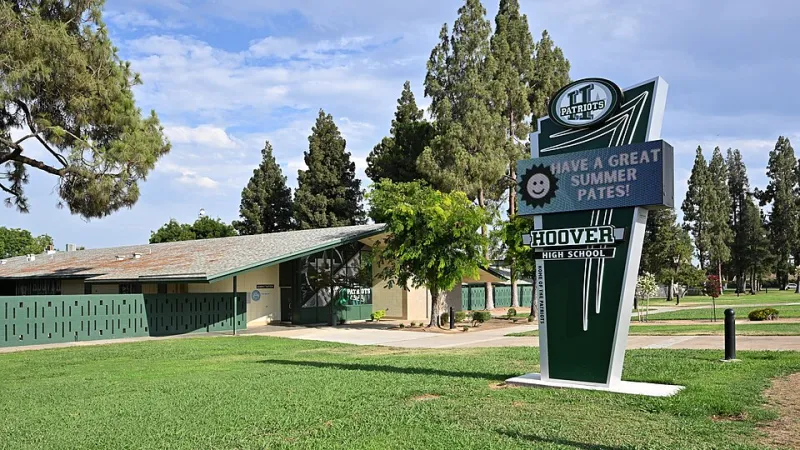
Photo: G. Edward Johnson, CC BY 4.0, via Wikimedia Commons
Every spring, American middle and high school students are handed a familiar assignment: choose a question, do background research, cite peer-reviewed sources, and present a poster at the science fair. The instructions are meant to teach curiosity, evidence, and communication. Too often, they teach something else: science is something other people can read.
The first search result is usually a locked door. A student finds a promising paper on sleep and memory, or microplastics in local water, or vaccine hesitancy in rural counties. The abstract is free. The methods, data, and discussion sit behind a subscription. The school library has a few databases, but they expire in June. The public library has others, but the student needs a card and a ride. By the time the assignment is due, the student has learned a quiet lesson about who belongs in the conversation.
The First Search Result Is a Locked Door
This is not a minor inconvenience. It is a civic formation problem. When students are asked to admire research they cannot read, they learn to treat science as a spectator sport. They learn to cite without comprehending. They learn that access is a privilege granted by institutional luck. And they learn it years before they ever apply to a university.
The gap is also unequal. A well-funded suburban district may subscribe to a bundle of journals. A rural district may share one librarian across three schools. A student with a laptop and broadband at home can email an author or use an interlibrary loan portal. A student without either may simply give up. The science fair poster looks the same from a distance. The lesson behind it does not.
Five Ways Students Hit the Wall
-
The assignment assumes access. Teachers who grew up with university libraries may not realize that a high school student cannot download a thirty-dollar article. The instruction says peer-reviewed. The infrastructure says no.
-
School databases are the first cut. When budgets tighten, database subscriptions are easy to cancel because their use is hard to measure. A librarian can show a class how to search, but cannot conjure a journal license that no longer exists.
-
Citation becomes performance. Students learn to paste a reference into a bibliography without reading the paper. That is not plagiarism in the ordinary sense. It is a rational response to an impossible task.
-
Curiosity gets punished. A student who asks a sharp question may find that the best evidence is closed. A student who asks a safer question may find a free summary. The assignment quietly rewards the safer question.
-
The future narrows. When a fourteen-year-old concludes that research is for people with the right credentials, the pipeline loses a potential scientist. That loss is not visible in a test score. It is visible in who does not show up to the next lab.
What Actually Helps: A Student’s Survival List
There are legal, free paths to real research. They are not a substitute for systemic change, but they can keep a student moving.
- PubMed Central. For biomedical topics, this is the first stop. It hosts free full-text articles from NIH-funded research and many journals.
- The Directory of Open Access Journals. DOAJ indexes peer-reviewed journals that do not charge readers. Search by subject, not just by keyword.
- Preprint servers. arXiv, bioRxiv, and medRxiv offer early versions of research. They are not peer-reviewed in the traditional sense, so students should learn to note that difference.
- Unpaywall. This browser extension finds legal free copies of articles when they exist. It is not magic, but it saves time.
- CORE and Digital Commons. These aggregators collect open-access papers from repositories and universities.
- Public library databases. Many US public libraries offer access to databases that schools cannot afford. A librarian can often help a student log in remotely.
- Interlibrary loan. It can take days, but it can deliver a paper that a school cannot buy. Students should ask early.
- Email the author. A polite request to a corresponding author often works, especially for papers with public funding. Students should identify themselves, explain the project, and ask for a copy.
What Schools Should Do
The deeper fix is not a longer list of workarounds. It is a commitment to open access as a K–12 library standard. School districts should treat access to publicly funded research the way they treat access to textbooks: as infrastructure, not charity. Librarians should be included in curriculum planning. Teachers should be trained to distinguish open-access sources from paywalled ones. Districts should publish a simple guide to free research portals on every school website.
States can help. A statewide open-access portal for K–12 students would cost far less than a single standardized testing contract and would serve every district that cannot afford its own bundle. Public universities could open their repository collections to nearby schools. Federal agencies could require that taxpayer-funded research be available in formats that school librarians can actually use.
The Future We Owe Them
Open access should begin in the school library, not the university. By the time a student reaches college, the habits are already set. If we want a public that can read, question, and use science, we have to give young people real practice. A science fair should teach students that evidence is within reach. Right now, too many posters teach the opposite.
The fix is not to lower the standards. It is to open the shelves. A student who can read the paper can argue with it. A student who can argue with it might become the scientist who writes a better one. That is the whole point of science education, and it should not require a subscription.