The Last Desk Between Patients and the Paywall: Inside America's Underground Science Liberation Network
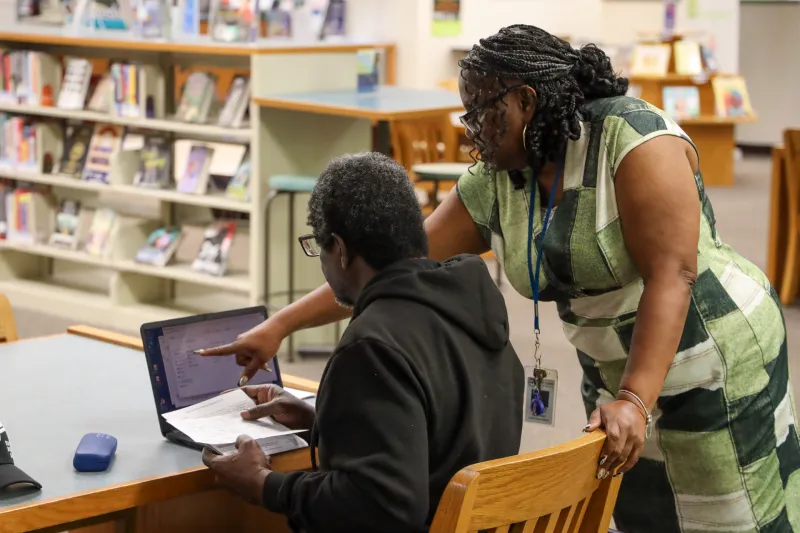
Photo: public library reference desk librarian helping patron computer, via cms.leoncountyfl.gov
The email arrived on a Tuesday morning at a mid-sized public library in Ohio. A retired schoolteacher, recently diagnosed with an aggressive form of lymphoma, wanted to read the clinical trial results her oncologist had mentioned. The study was published in a journal her hospital did not subscribe to. A single article download would cost her $49.95. She had three questions and no way to answer them without a librarian named Diane.
Diane is not her real name, but her work is real, and it happens thousands of times a day across the United States. American librarians—public, medical, and academic—have become the de facto last line of defense between ordinary people and a scientific publishing system that prices them out. Their tools are unglamorous: interlibrary loan agreements, consortium access deals, and a deep institutional knowledge of how to route a request through the one library in a three-state radius that happens to hold the right journal. Their mission, increasingly, is contraband-adjacent: delivering taxpayer-funded research to the taxpayers who financed it.
A Network Built on Trust and Fine Print
The machinery behind this quiet rescue operation is the interlibrary loan (ILL) system, a decades-old web of reciprocal agreements that lets a patron in rural Kansas borrow a journal article held by a university library in Massachusetts. Under the traditional model, libraries paid subscription fees and could share copies of individual articles with partner institutions under 'fair use' provisions of copyright law.
That model is eroding. Major publishers—including Elsevier, Springer Nature, and Wiley—have steadily migrated from subscription licenses to article-by-article access models that explicitly restrict or prohibit interlibrary sharing. Digital rights management now encases PDFs in wrappers that block printing, forwarding, and sometimes even screenshotting. Where librarians once freely mailed photocopies, they now navigate terms-of-service agreements that treat a loan to a neighboring library as a contractual violation.
The result, librarians report, is a system that works beautifully for the affiliated—students, faculty, employees of large hospitals—and fails everyone else. The self-employed contractor with a chronic illness. The local journalist chasing a contamination story. The retired engineer investigating groundwater data near her home. They all end up, eventually, at a reference desk.
The Patrons Librarians Can't Turn Away
Medical librarians describe a pattern that has intensified as health information has moved online but primary research has not moved out from behind paywalls. Patients arrive with printouts of abstracts, or with physician recommendations they cannot follow up on. Many are confronting serious diagnoses and want more than a summary—they want the data, the methodology, the side-effect tables.
Public librarians describe a different but related clientele: independent researchers, genealogists-turned-historians, small-town reporters at outlets too lean for institutional database subscriptions. For these patrons, the librarian is not a convenience. The librarian is the entire infrastructure.
This is a peculiar irony of American science policy. Federal agencies fund the overwhelming majority of basic biomedical research through the National Institutes of Health, whose public access policies now mandate that resulting articles be freely available. Yet a vast body of research remains locked under embargo periods, published in hybrid journals, or trapped in publications outside federal funding streams entirely. The gap is filled by library workers improvising access one request at a time.
When the Workaround Becomes the Target
Publisher enforcement has grown more aggressive. Libraries have reported receiving notices flagging ILL activity as excessive use, and some license negotiations now include explicit caps on article sharing that render the practice functionally impossible. A few institutions have faced accusations of systematic copyright violation for loan practices that were standard professional behavior for fifty years.
Librarians, bound by professional ethics and institutional caution, largely comply. But many describe a growing moral discomfort. They are being asked to enforce restrictions on research their own institutions, their own states, and their own federal government paid to produce. Several state university systems have pushed back, negotiating 'read and publish' agreements and open-access commitments. But the burden of the current system does not fall on well-resourced universities. It falls on the teacher in Ohio, and on the librarian deciding how far she can go to help her.
What a Real Fix Would Look Like
The policy answer is not complicated, though the politics are. Congress could codify and expand public access mandates across all federal research agencies, eliminating embargoes for taxpayer-funded work. States could follow the lead of California and New York, which have moved to make publicly funded research immediately open. Funders could condition grants on deposit in open repositories, and libraries could redirect subscription dollars toward supporting open publishing infrastructure rather than renting access from conglomerates whose profit margins routinely exceed those of the tech industry.
Until then, the interlibrary loan request will keep moving through the network—one librarian, one article, one patient at a time. It is a remarkable act of quiet public service. It should not have to be an act of quiet resistance.