Publicly Funded, Privately Locked: The Quiet Scandal of Taxpayer-Sponsored Science You Can't Read
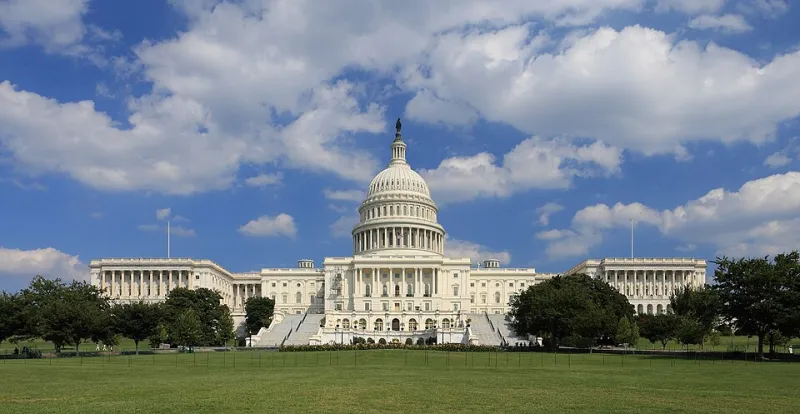
Photo: Martin Falbisoner, CC BY-SA 3.0, via Wikimedia Commons
Imagine commissioning a contractor to build a public library with your tax dollars, then arriving to find the doors locked and a private company charging admission. The books inside were written with public funds, catalogued with public funds, and shelved with public funds — but reading them will cost you $35 per title, per visit. No library card accepted.
This analogy is imperfect in its specifics but accurate in its logic. It describes, with reasonable fidelity, what happens to a significant portion of federally funded scientific research in the United States every single year.
Following the Money
The National Institutes of Health, the largest public funder of biomedical research in the world, distributes approximately $47 billion annually to universities, research hospitals, and scientific institutions across the country. The National Science Foundation contributes an additional $9 billion or so toward fundamental research across virtually every scientific discipline. These are not small numbers. They represent a sustained, multigenerational investment by American taxpayers in the expansion of human knowledge.
The research that emerges from these investments — the clinical trials, the genomic studies, the epidemiological analyses, the materials science breakthroughs — is then written up by the scientists who conducted it and submitted to academic journals for publication. Here is where the arrangement becomes difficult to justify on any grounds of public interest.
The journals, most of which are operated by large commercial publishing companies such as Elsevier, Springer Nature, and Wiley, do not typically pay the scientists for their work. In many cases, they do not pay the peer reviewers who evaluate the research for quality either — those reviewers are usually other academics working voluntarily. The publishers then sell access to the finalized articles back to university libraries at prices that have risen at roughly three times the rate of inflation over the past two decades, and to individual readers at per-article fees that routinely exceed $30.
The result: research funded by American taxpayers, conducted by American scientists, evaluated by American academics, is effectively privatized at the point of publication.
The Health Consequences Are Not Abstract
The impact of this arrangement extends well beyond academic inconvenience. Consider the patient with a newly diagnosed chronic illness who wants to understand the latest treatment research. Or the rural physician practicing in a community without access to a major academic medical center's library system. Or the public health official in a state agency trying to review current evidence during an emerging disease outbreak.
All of these individuals — each of whom has a direct, legitimate stake in publicly funded health research — may find themselves locked out of the very findings that could inform their decisions.
During the COVID-19 pandemic, this problem became briefly and starkly visible. Publishers, under considerable public pressure, temporarily made coronavirus-related research freely available. The speed with which the scientific community was able to share, build upon, and apply that research offered a glimpse of what open science infrastructure could accomplish at scale. When the emergency designations expired, many publishers quietly restored their standard access restrictions.
The lesson was not lost on open-access advocates: the barriers are a choice, not a necessity.
What Successful Reform Looks Like
The good news is that the architecture of publicly funded research can be changed, and in several important cases, it already has been.
The NIH's PubMed Central repository, which requires federally funded researchers to deposit their work within twelve months of publication, now contains millions of freely accessible articles. The 2022 White House Office of Science and Technology Policy memo expanded this mandate, requiring immediate open access for all federally funded research by the end of 2025 — eliminating the twelve-month embargo that had previously allowed publishers a window of exclusive commercial access.
At the institutional level, the University of California system made headlines in 2019 when it cancelled its $11 million annual contract with Elsevier over open-access disputes, subsequently negotiating a transformative agreement that made UC-authored research freely available upon publication. The Massachusetts Institute of Technology followed a similar path, adopting a faculty open-access policy that has resulted in tens of thousands of papers being freely deposited in its institutional repository.
These examples demonstrate that the status quo is neither inevitable nor immovable. It persists because of institutional inertia, commercial lobbying, and a general public unawareness of how the system functions.
What You Can Do — Right Now
Citizens who believe that publicly funded knowledge should be publicly accessible have more leverage than they may realize. The following steps represent meaningful, actionable ways to push for systemic change.
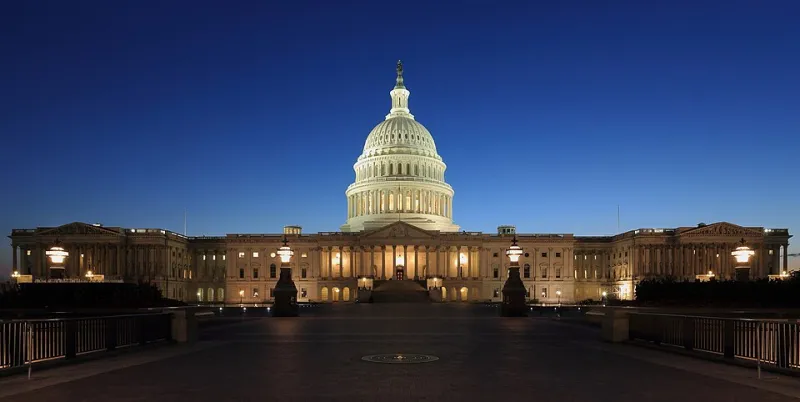
Contact your federal representatives. The open-access provisions in recent executive policy can be strengthened or weakened by Congressional action. Constituent pressure on members of the House and Senate science committees has historically influenced federal research policy. A brief, direct message articulating that you expect taxpayer-funded research to be freely accessible is more impactful than it may seem.
Use and promote open-access repositories. PubMed Central, Europe PMC, arXiv, bioRxiv, and institutional repositories hold millions of freely accessible articles. When you link to, share, and cite openly available versions of research, you reduce commercial publishers' leverage and increase the visibility of open science infrastructure.
Support open-access mandates at your local institutions. Public universities, community colleges, and regional research centers often have more flexibility to adopt open-access policies than they exercise. Faculty senates, student governments, and community advisory boards are legitimate channels for advocating institutional change.
Ask your employer or local library about interlibrary loan services. Many Americans don't realize that public library systems can obtain academic articles through interlibrary loan programs at no cost to the patron. These services are underutilized and worth knowing about.
The Principle at Stake
At its core, the debate over publicly funded research access is a debate about who knowledge belongs to. Commercial publishers argue that their editorial and production processes add value that justifies their pricing models. That argument deserves engagement — but it does not justify a system in which the public pays twice: once to generate the research and again to read it.
The scientific enterprise in the United States is among the most consequential public investments this country makes. Its findings shape medical practice, inform environmental regulation, guide public health response, and drive technological innovation. The idea that this body of knowledge should be freely available to every American — the nurse, the patient, the student, the curious citizen — is not radical. It is the logical extension of the public investment that made the knowledge possible in the first place.
The barriers are real. But they were built, and they can be dismantled.