Silicon Valley's Quiet Harvest: How AI Giants Are Feeding on Publicly Funded Science Without Asking
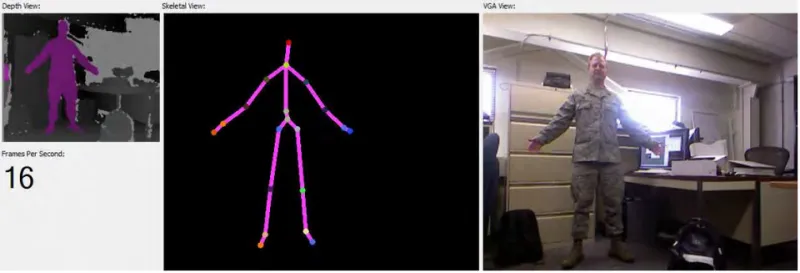
Photo: Captain Andrew M. Freeman, Air Force Institute of Technology / Air Force Research Laboratories (AFRL), Sensors, ATR, Target Recognition Branch., Public domain, via Wikimedia Commons
Somewhere in the architecture of a large language model, there may be fragments of a cancer study you helped fund. Perhaps a climate dataset assembled over twenty years by federal researchers. A pharmacological trial conducted at a land-grant university with NIH dollars. You paid for that science. A technology company is now monetizing it — and nobody asked you, or the researchers who produced it, for permission.
This is not a hypothetical. It is an unfolding policy crisis that sits at the intersection of artificial intelligence development, intellectual property law, and the foundational principles of open science. And it has received remarkably little public scrutiny.
The Scale of What's Being Taken
The training datasets behind today's most commercially powerful AI systems are vast, often opaque, and frequently populated with scientific literature and research data scraped from the open web. Repositories like PubMed Central — which hosts millions of peer-reviewed biomedical articles made freely accessible under federal open-access mandates — have been identified as significant sources for AI training corpora. arXiv, the preprint server that hosts physics, mathematics, and computer science research, has similarly been harvested at scale.
The irony is sharp: open-access policies designed to democratize scientific knowledge for the public benefit have inadvertently created a richly stocked pantry for private AI development. Researchers who advocated for open access so that physicians in rural clinics or students in underfunded schools could read their findings did not anticipate that the primary beneficiary would be a multibillion-dollar technology sector.
According to reporting by several academic technology observers, major AI developers including those behind prominent large language models have incorporated scientific text repositories into their training pipelines, sometimes without disclosing the sources with any specificity. When dataset documentation does exist, it frequently lists broad categories rather than named repositories, making independent audit nearly impossible.
The Legal Gray Zone
The legal terrain here is genuinely unsettled, and that ambiguity is doing a great deal of work in favor of the companies doing the scraping.
Much of the scientific literature that ends up in AI training sets is published under Creative Commons licenses, which permit broad reuse with attribution. Whether commercial AI training constitutes the kind of transformative use those licenses contemplate is a question that copyright scholars are actively debating. Some legal analysts argue that training a model on text is analogous to a human reading and synthesizing information — a process not traditionally subject to copyright restriction. Others contend that systematic, automated ingestion for commercial profit is categorically different and that existing licensing frameworks simply were not designed with this use case in mind.
Federal research data presents additional complications. Data produced under government grants often carries specific use restrictions, and agencies like the National Institutes of Health have data sharing policies that impose conditions on downstream use. Whether those conditions extend to AI training, and whether they are enforceable against third parties who access data through public repositories, remains largely untested in court.
The researchers themselves occupy a peculiar position. In many cases, the scientists who conducted the underlying studies assigned copyright to their publishers upon submission — a common and widely criticized practice in academic publishing. That means the researchers may have no direct legal claim even when their work is used in ways they never intended or endorsed.
Researchers Are Starting to Fight Back
Despite the structural disadvantages, a growing number of researchers and academic institutions are beginning to organize resistance.
Some scientists have begun embedding what are sometimes called "canary traps" or watermarks in their published data — subtle, deliberate anomalies that can reveal whether a specific dataset has been incorporated into a model's training. Others are advocating for new metadata standards that would allow data stewards to specify machine-learning use restrictions in a format that automated crawlers could theoretically recognize and respect.
A coalition of academic publishers and research institutions has called on Congress to establish clearer statutory boundaries around AI training data, arguing that the current patchwork of copyright doctrine and licensing terms is inadequate to protect the integrity of the scientific knowledge ecosystem. Proposals have ranged from mandatory disclosure requirements — compelling AI developers to publish detailed inventories of their training data — to compensation frameworks modeled loosely on music licensing structures, in which creators receive royalties when their work is used commercially.
At the federal level, the conversation is moving, if slowly. The U.S. Copyright Office has solicited public comments on AI and copyright, and several congressional hearings have touched on the training data question. Advocates note, however, that the lobbying resources of major technology companies vastly outweigh those of the scientific community, and that legislative progress has been frustratingly incremental.
What This Means for Open Science
The implications for the open-access movement deserve particular attention, because they are not straightforward.
Open science advocates have long argued that removing paywalls and making research freely available generates enormous social benefits — accelerating discovery, enabling collaboration across institutional boundaries, and ensuring that publicly funded knowledge serves the public. Those arguments remain sound. But the AI training data controversy introduces a new dimension of risk: that openness, without adequate governance, can be captured and converted into private advantage at a scale that undermines the very equity goals open access was meant to serve.
Put plainly, if the primary practical effect of open-access mandates is to provide free training material for commercial AI systems while doing little to improve knowledge access for the communities those mandates were designed to benefit, something has gone badly wrong. The solution is not to retreat from open access — that would be a profound mistake. The solution is to build governance infrastructure sophisticated enough to distinguish between democratizing uses and extractive ones.
That distinction matters enormously. A community health worker in rural Mississippi using an open-access database to inform patient care is doing exactly what open science is for. A technology company scraping that same database to build a proprietary product it will sell back to hospitals at premium prices is doing something qualitatively different, even if both uses are technically permitted under current rules.
An Accountability Gap That Cannot Stand
Knowledge Barrier-Less Press has consistently argued that scientific knowledge — particularly research produced with public dollars — belongs, in a meaningful sense, to the public. That principle does not become less true when the entity exploiting that knowledge is a technology company rather than a traditional academic publisher.
If anything, the scale and opacity of AI data harvesting make the accountability deficit more urgent. Publishers, for all their faults, operate within a relatively visible system of contracts, licenses, and institutional relationships. AI training pipelines are often proprietary, poorly documented, and subject to minimal external scrutiny.
The researchers who spent careers generating the data now feeding these systems deserve, at minimum, transparency about how their work is being used. The public that funded that research deserves assurance that open-access policies are serving democratic ends rather than simply subsidizing the next generation of commercial AI products.
Those are not unreasonable demands. They are the baseline conditions for a scientific knowledge ecosystem that takes its own values seriously.