The Library Card as Lab Pass: How Public Reference Desks Are Opening Science to Everyone
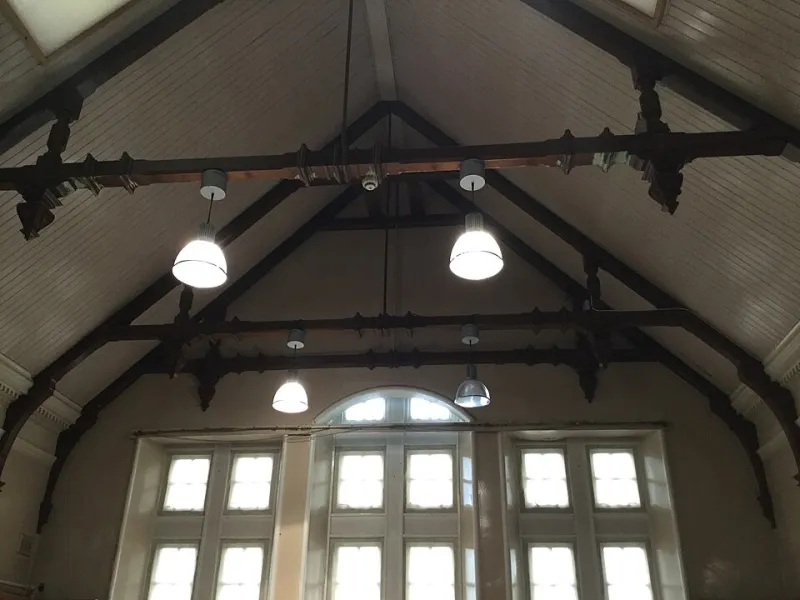
Photo: StirlingLibsAndArchives, CC BY-SA 4.0, via Wikimedia Commons
At a branch library in Tucson, Arizona, the reference desk handles questions that rarely fit the old card-catalog script. A retired mechanic wants to know whether the diabetes pamphlet his clinic gave him reflects the latest research. A home-schooled teenager needs a peer-reviewed article on Sonoran Desert pollinators. A nurse practitioner on a lunch break is trying to untangle a paywalled study about heat illness among outdoor workers. None of them has a university login. All of them have a library card.
That scene is repeated in thousands of communities across the United States. The public library has become an accidental but indispensable layer of America's open-science infrastructure. It is not a research university, a federal agency, or a journal publisher. It is a trusted public room with a broadband connection, a trained staff, and a stubborn commitment to the idea that knowledge should not be rationed by ability to pay.
The Desk Where Paywalls Meet Their Match
The reference desk is where the abstractions of scholarly publishing become concrete. A patron may arrive with a diagnosis, a court notice, a farming question, or a child's science-fair project. The librarian's job is not to practice medicine or law. It is to find credible information, explain how to read it, and help the patron understand what is known, what is uncertain, and what remains contested.
That work increasingly involves open-access repositories, government databases, and interlibrary loan. A librarian in rural Appalachia may use a state library consortium to request an article from a university collection. A librarian in Queens may walk a patron through PubMed Central, the National Library of Medicine's free archive, and then help interpret a dense abstract. A librarian in a small Montana town may set up a laptop so a patron can join a citizen-science project tracking wildfire smoke or migrating birds.
These are not glamorous services. They are the practical plumbing of open science. A PDF that is free to download is not truly open if the reader lacks the device, the bandwidth, the language support, or the confidence to use it. Libraries supply all four.
From Story Hour to Data Literacy
The modern library's science role extends well beyond handing out articles. Many public libraries run data-literacy workshops that teach residents how to read a chart, evaluate a study, or find local health data. Others host citizen-science meetups where residents collect observations for researchers studying air quality, biodiversity, or urban heat. Some partner with universities and federal agencies to bring scientific instruments, speakers, and training into neighborhoods that rarely see either.
This is open science in its most civic form. It treats scientific knowledge not as a product to be consumed passively but as a public resource that people can use and even help produce. A library card becomes a lab pass. A reference interview becomes a form of peer support. A community room becomes a place where the boundary between expert and layperson softens without disappearing.
That role is especially important in places where the nearest university is hours away and the local hospital has cut back on patient education. For many Americans, the public library is the only institution that will sit with them while they try to understand a confusing body of evidence. It is also one of the few places where they can do so without being asked to prove they belong.
The Budget Test
Yet the same libraries carrying this load are often asked to do more with less. Local budgets tighten. Staff positions go unfilled. Hours shrink. Broadband upgrades wait. Federal programs that support library technology and services become political footballs. When a library cuts its reference staff or ends a database subscription, the loss is not just a line item. It is a closed door for the patron who cannot afford a journal subscription or a personal data plan.
Open science advocates often focus on publishers, funders, and university policies. Those fights matter. But the access gap is also a public-infrastructure gap. A mandate that makes research free to read does little for a family without a computer at home. A repository full of PDFs does not replace a librarian who can help a patron navigate them. The library is where open access meets ordinary life.
A Civic Infrastructure for Knowledge
There is a temptation to treat libraries as nostalgia. That would be a mistake. They are among the most adaptable knowledge institutions in the country. They have absorbed new formats, new technologies, and new public needs without abandoning their core promise: free access, expert help, and intellectual freedom.
If the United States is serious about open science for everyone, everywhere, it should treat public libraries as partners rather than afterthoughts. That means stable funding, strong broadband, professional staffing, and support for data literacy and citizen science. It means recognizing that the reference desk is not a relic of the print era. It is a frontline service in the fight against information inequality.
The patron in Tucson may never read a journal editorial about open-access policy. But if the librarian finds the study, explains the findings, and helps the patron ask better questions, the policy has done its job. That is what a knowledge barrier-less press should look like in practice: not only a free article, but a public place where someone can understand it.