No Lab Coat Required: How Everyday Americans Are Making Real Scientific Discoveries
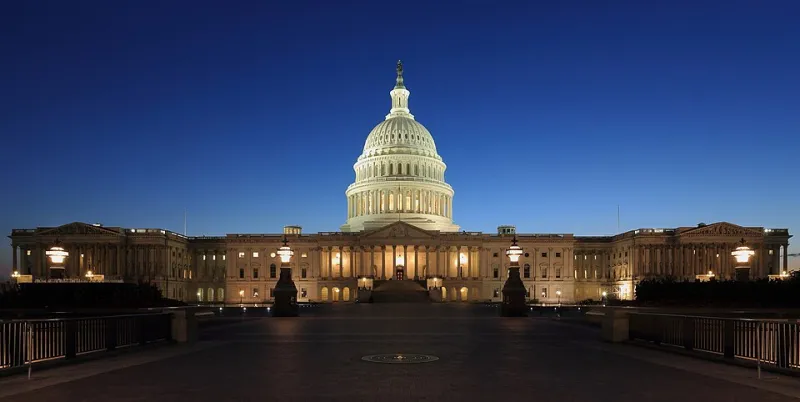
Photo: Gannu03, CC BY-SA 4.0, via Wikimedia Commons
The Myth of the Ivory Tower Scientist
For generations, the image of scientific discovery has been remarkably consistent: a solitary expert in a white coat, hunched over equipment in a university laboratory that most people will never enter. That image is not merely outdated—it is actively harmful. It implies that knowledge production is an exclusive pursuit, reserved for those who have navigated years of graduate school, secured institutional affiliations, and obtained access to expensive journals. At Knowledge Barrier-Less Press, we believe that premise deserves to be challenged at every opportunity.
The good news is that tens of thousands of ordinary Americans are already doing exactly that. Through the rapidly expanding field of citizen science—structured, collaborative research projects that recruit members of the public as active contributors—non-professional volunteers are generating data, identifying patterns, and co-authoring findings that appear in legitimate, peer-reviewed scientific literature. The barrier to entry is often nothing more than a reliable internet connection and a willingness to learn.
What Citizen Science Actually Looks Like
The term "citizen science" can sound abstract, so it helps to examine concrete examples of what it produces.
Galaxy Zoo launched in 2007 with a simple premise: astronomers at Oxford had accumulated more than one million galaxy images from the Sloan Digital Sky Survey, far too many for any research team to manually classify. They opened the task to the public. Within 24 hours of launch, volunteers were submitting 70,000 classifications per hour. Within the first year, more than 150,000 people had participated, producing a dataset that would have taken professional researchers decades to compile alone. The project has since expanded into the Zooniverse platform, which now hosts more than 80 active research projects spanning ecology, history, medicine, and physics.
iNaturalist, a joint initiative of the California Academy of Sciences and the National Geographic Society, takes a different approach. Users photograph plants, animals, fungi, and other organisms they encounter in everyday life—a spider on a windowsill, a mushroom in a park, a hawk circling above a parking lot—and submit those observations to a shared database. Machine learning assists with initial identification, but the community refines and validates each record. The platform has now logged more than 200 million observations from over five million contributors worldwide, and the resulting data has been cited in hundreds of peer-reviewed studies examining biodiversity loss, species range shifts driven by climate change, and the ecological health of urban environments.
These are not novelty projects. They are legitimate scientific infrastructure.
Why This Matters Beyond the Data
The implications of citizen science extend well beyond any single dataset. When research depends on large-scale, geographically distributed observation, professional scientists simply cannot be everywhere at once. A network of engaged volunteers can monitor environmental conditions across an entire continent simultaneously—something no university department could staff or fund independently.
Consider the Community Collaborative Rain, Hail and Snow Network (CoCoRaHS), a US-based volunteer precipitation monitoring program that began in Colorado in 1998 following a catastrophic flash flood. Today, more than 20,000 active volunteers across all 50 states submit daily precipitation measurements from their backyards. The National Weather Service, NOAA, and academic climate researchers routinely incorporate this data into models and forecasts. Those volunteers are not performing a courtesy service for professional scientists—they are essential contributors to the nation's weather and climate monitoring infrastructure.
Beyond data collection, citizen science democratizes scientific literacy itself. Participants develop genuine familiarity with research methodology, statistical thinking, and the iterative nature of evidence-based inquiry. A retired schoolteacher in rural Nebraska classifying protein folding patterns on Foldit, or a high school student in Memphis logging bird sightings for the Cornell Lab of Ornithology's eBird program, is not merely helping researchers—they are becoming more scientifically fluent themselves. That fluency has societal consequences that are difficult to overstate.
Addressing the Skeptics
Fair-minded critics do raise legitimate questions about data quality. If anyone can contribute observations, how reliable is the resulting dataset? This is a reasonable concern, and the citizen science community takes it seriously.
Most well-designed projects incorporate multiple layers of validation. iNaturalist, for instance, requires agreement from multiple independent identifiers before an observation reaches "Research Grade" status. Zooniverse projects typically have each task completed by multiple volunteers, then use statistical aggregation to identify consensus. Professional researchers who design these projects build quality control directly into the architecture, and published studies using citizen science data routinely include methodology sections explaining how volunteer contributions were validated.
The peer-reviewed literature bears this out. A 2021 meta-analysis published in Biological Conservation examined 63 studies comparing citizen science biodiversity data against professionally collected datasets and found that, when projects were well-designed and included appropriate quality filters, volunteer-generated data was statistically comparable in reliability to expert-collected data.
A Practical Guide to Getting Involved
If you are ready to contribute to active research, the following platforms offer immediate entry points:
-
Zooniverse (zooniverse.org): The world's largest citizen science platform. Current projects include identifying wildlife in camera trap footage, transcribing historical ship logs to study past climate, and analyzing satellite imagery for environmental change. No prior experience required.
-
iNaturalist (inaturalist.org): Download the app and start photographing the living world around you. Particularly valuable for anyone in a biodiverse region or near natural areas, though urban observations are equally important.
-
eBird (ebird.org): Operated by the Cornell Lab of Ornithology, this platform allows birdwatchers at any skill level to log observations that feed directly into global biodiversity research.
-
SciStarter (scistarter.org): A curated directory of citizen science projects searchable by topic, location, and time commitment. An excellent starting point if you are unsure where your interests align.
-
Globe Observer (observer.globe.gov): A NASA-affiliated program through which volunteers collect environmental data—cloud cover, land surface conditions, mosquito habitats—that supplements satellite observations.
Most of these platforms are free to use, require no specialized equipment beyond a smartphone, and offer onboarding tutorials that will have you contributing within minutes.
The Democratization of Discovery
Science has never been the exclusive property of institutions. Throughout history, significant contributions have come from amateur astronomers, self-taught naturalists, and curious generalists who refused to accept that curiosity required credentials. What is new today is the infrastructure—digital platforms, mobile technology, and open data standards—that allows that tradition to scale to millions of participants simultaneously.
The citizen science movement is not a workaround or a compromise. It is an expansion of what scientific inquiry can be when the barriers to participation are deliberately and systematically removed. Every observation logged, every galaxy classified, every precipitation measurement submitted is a small act of resistance against the notion that knowledge production belongs to a privileged few.
You do not need a PhD. You need a question, a little time, and the willingness to show up.