The Preprint Revolution: How Scientists Are Publishing Their Findings Before Anyone Can Stop Them
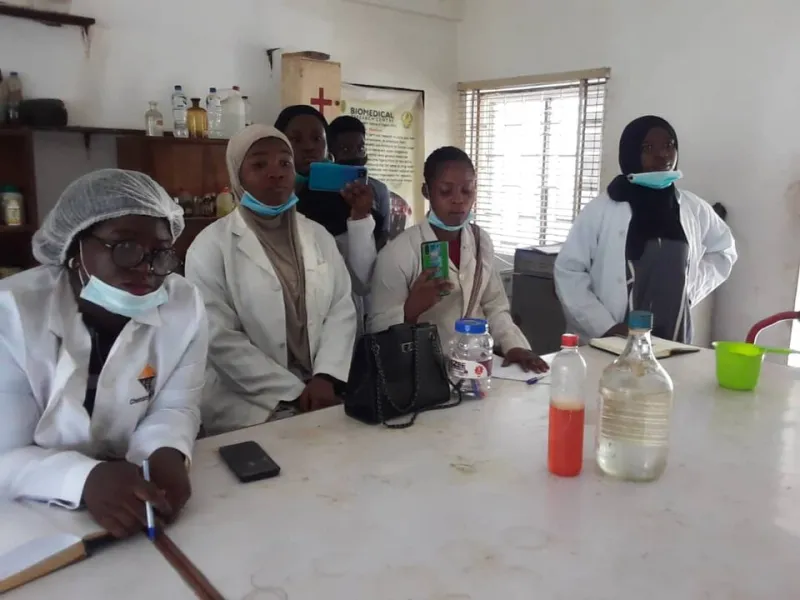
Photo: Oloyedegk, CC BY-SA 4.0, via Wikimedia Commons
A Discovery That Cannot Wait
In January 2020, as a novel coronavirus was beginning its silent spread beyond Wuhan, China, a team of Chinese researchers uploaded a complete genomic sequence of the pathogen to an open-access database before any formal journal publication had occurred. Within days, laboratories on multiple continents had downloaded that sequence and begun designing what would eventually become the mRNA vaccines administered to hundreds of millions of Americans. The formal peer-reviewed paper describing the sequence appeared later. The science, however, had already moved.
That episode encapsulates both the promise and the logic of preprints—research manuscripts posted to open online servers before, or sometimes instead of, formal journal publication. The COVID-19 pandemic did not create the preprint movement, but it accelerated it dramatically and demonstrated, in the most consequential possible context, what scientific communication looks like when institutional gatekeeping is removed from the critical path.
What a Preprint Actually Is
Understanding preprints requires briefly understanding what they are replacing—or at least competing with.
Traditional academic publishing follows a well-worn sequence. A research team completes a study, writes a manuscript, and submits it to a journal. The journal's editors send it to two or three anonymous expert reviewers, who may request revisions over multiple rounds. This process typically takes between six months and two years. If accepted, the paper is formatted, copyedited, and eventually published—often behind a paywall that charges readers or their institutions hundreds of dollars per article, despite the fact that neither the authors nor the peer reviewers are typically compensated for their labor.
A preprint bypasses most of that sequence. The authors upload their manuscript—complete with data, methods, and conclusions—to a publicly accessible server. It becomes immediately available to anyone in the world, free of charge. No embargo, no subscription, no waiting.
The major preprint servers have become genuine scientific institutions in their own right. arXiv (pronounced "archive"), launched at Los Alamos National Laboratory in 1991, now hosts more than two million manuscripts in physics, mathematics, computer science, and related fields. bioRxiv and its companion server medRxiv, both operated by Cold Spring Harbor Laboratory, have become the dominant preprint repositories for the life sciences and medicine respectively. Since bioRxiv's founding in 2013, its growth has been nearly vertical—the platform now receives tens of thousands of new submissions monthly.
Speed as a Scientific Value
The most immediate practical argument for preprints is temporal. Scientific knowledge that is delayed is, in certain fields, scientific knowledge that is functionally withheld.
This is nowhere more evident than in medicine and public health. During the early months of the COVID-19 pandemic, the overwhelming majority of clinically actionable research circulated first as preprints. Studies on transmission dynamics, clinical presentations, potential therapeutics, and vaccine candidates appeared on medRxiv and bioRxiv days or weeks before any journal could process them. Physicians, epidemiologists, and public health officials—desperate for any reliable information—read and acted on preprint findings in real time.
The same dynamic applies, with somewhat less urgency but no less importance, across virtually every research domain. A climate scientist whose findings on Arctic ice loss are delayed 18 months by journal review has effectively withheld that information from policymakers who needed it sooner. A cancer researcher whose trial data sits in editorial limbo cannot be cited by oncologists who might alter treatment protocols based on those findings. The temporal cost of traditional publishing is not abstract—it is measured in policy decisions unmade and patients untreated.
The Equity Dimension
Beyond speed, preprints carry a structural equity argument that aligns directly with the mission of open science.
Traditional journal publication is not merely slow—it is expensive. Many high-impact journals charge authors article processing fees ranging from $2,000 to $11,000 for open-access publication. Researchers at well-funded R1 universities in the United States can often absorb these costs through grants. Scientists at underfunded institutions, at community colleges, at research universities in lower-income countries, or working independently cannot. The result is a publishing ecosystem in which financial resources—rather than the quality of the science—determine visibility.
Posting to arXiv or bioRxiv costs nothing. A researcher at a historically Black college or university in Alabama, a public health official at a county health department in rural Appalachia, or a scientist at a university in Ghana has identical access to these platforms as a faculty member at Harvard or MIT. That structural equality is not incidental—it is the point.
Legitimate Concerns Deserve Honest Engagement
The preprint movement's critics are not simply defenders of institutional privilege, and intellectual honesty requires acknowledging their concerns directly.
Peer review, for all its slowness and imperfection, does catch errors. Reviewers identify methodological flaws, flag inappropriate statistical analyses, and occasionally prevent genuinely misleading findings from entering the scientific record as established fact. When that filter is removed, the potential for flawed research to circulate—and to be picked up by journalists or policymakers who may not recognize its preliminary status—is real.
The COVID-19 pandemic illustrated this risk as clearly as it illustrated the benefits of preprints. Several high-profile preprints describing potential COVID treatments, most notably an early hydroxychloroquine study, were widely circulated in media before serious methodological flaws were identified. The retraction came after the damage to public understanding had already been done.
Preprint advocates respond—reasonably—that this is primarily a science communication problem rather than a preprint problem. The solution is better public literacy about what a preprint represents: a preliminary finding that has not yet been formally reviewed, not a settled scientific conclusion. Most major preprint servers now display prominent disclaimers to this effect. Some, including medRxiv, have implemented basic screening procedures to remove papers with obvious errors or ethical violations before they become publicly accessible.
The peer review system itself is also far from infallible. Peer-reviewed journals have retracted thousands of papers, including some with catastrophic public health consequences—the fraudulent 1998 Wakefield paper linking vaccines to autism, which passed peer review and was published in The Lancet, remains the most consequential example. The existence of formal review does not guarantee reliability; its absence does not guarantee chaos.
A Publishing Industry Under Pressure
For the large commercial publishers that have built extraordinarily profitable businesses on the back of publicly funded research—Elsevier, Springer Nature, Wiley—the preprint movement represents an existential threat that they have so far failed to neutralize. Several have attempted to acquire preprint servers or launch competing platforms; others have updated submission policies to accept manuscripts already posted as preprints. None of these responses has slowed the movement's momentum.
The more consequential pressure may come from funders. The National Institutes of Health now requires that research it funds be made publicly accessible, and several major private foundations have adopted similar mandates. When the institutions controlling research dollars begin demanding open dissemination, the commercial publishers' leverage diminishes considerably.
What This Means for the Rest of Us
For researchers, the practical implication is clear: posting a preprint establishes priority, shares findings immediately, and invites community feedback that often improves the eventual published paper. For scientists in under-resourced settings, it provides a publication pathway that does not require institutional wealth.
For the American public—which funds the overwhelming majority of biomedical research through federal taxes—preprint servers represent something more fundamental: a mechanism through which the science their dollars produce becomes genuinely accessible before a commercial intermediary can erect a toll booth around it.
The knowledge was always yours. The preprint movement is simply making that fact harder to ignore.