From Your Front Porch to the Frontiers of Medicine: How Ordinary Americans Are Powering the Next Wave of Health Research
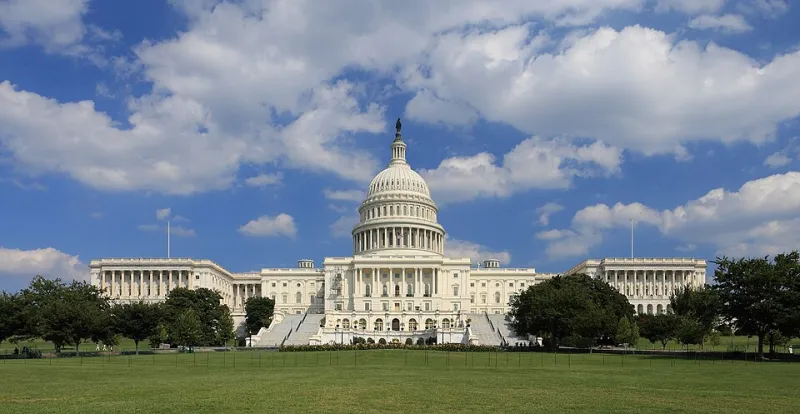
Photo: user Wonder woman0731, CC BY 2.0, via Wikimedia Commons
Science Has Left the Building
For most of the twentieth century, the image of medical research was fixed and familiar: white coats, controlled environments, institutional funding, and years of credentialed training before anyone was permitted near a meaningful experiment. That image is becoming obsolete. Across the United States, a quiet but consequential shift is underway—one in which the boundaries between researcher and research subject are dissolving, and where the person tracking monarch butterfly migrations in a suburban Ohio backyard or logging daily symptoms into a phone app in rural Mississippi may be contributing data that ends up in a peer-reviewed journal.
This is the citizen science movement, and in the domain of health and medicine, its consequences are profound. What was once dismissed as amateur enthusiasm is now being actively solicited by some of the most respected research institutions in the country. The National Institutes of Health, the Centers for Disease Control and Prevention, and dozens of major universities have structured formal programs around public participation. The reason is not altruism alone—it is scientific necessity.
The Data Problem That Only the Public Can Solve
One of the most persistent challenges in epidemiology and population health research is scale. A clinical study conducted at a single hospital might yield dozens or hundreds of participants. A citizen science initiative can yield hundreds of thousands. That difference is not merely quantitative; it is qualitative. Larger, more geographically diverse datasets allow researchers to identify patterns that would remain invisible in smaller cohorts—patterns related to race, income, geography, diet, and environmental exposure that are essential for understanding how disease actually behaves across a complex, heterogeneous society like the United States.
The NIH's All of Us Research Program illustrates this dynamic with particular clarity. Launched in 2018 and designed explicitly around open-science principles, the program has enrolled over 750,000 participants nationwide, with a deliberate emphasis on communities historically underrepresented in medical research. Participants contribute electronic health records, physical measurements, and biosamples. In return, they receive access to their own health information—a reciprocal arrangement that reflects the program's foundational commitment to participant equity. The resulting dataset has already supported hundreds of peer-reviewed studies examining everything from the genetic underpinnings of chronic pain to differential COVID-19 outcomes across demographic groups.
Apps as Research Infrastructure
Smartphone technology has become one of the most powerful instruments in the citizen science toolkit. Apple's ResearchKit framework, introduced in 2015, enabled researchers to deploy clinical-grade data collection tools directly to participants' phones. Within twenty-four hours of its first associated study going live, more people had enrolled than most traditional clinical trials recruit in an entire year.
The COVID Symptom Study, developed by researchers at King's College London and later expanded across the United States through a partnership with ZOE Health, demonstrated the model's potential at scale. More than four million Americans logged daily symptom reports through a free app during the pandemic's early waves. The resulting data allowed epidemiologists to track emerging variants, identify novel symptoms, and map geographic spread weeks before official surveillance systems registered the same trends. Multiple papers emerging from that dataset were published in journals including Nature Medicine and The Lancet—with citizen contributors formally acknowledged as co-investigators in some instances.
Similar models have been applied to conditions ranging from Parkinson's disease—where the Michael J. Fox Foundation's Fox Insight platform has enrolled over 50,000 participants who report symptoms and complete cognitive assessments from home—to asthma, where community-based air quality monitoring programs in cities like Detroit and Los Angeles have produced research illuminating the relationship between neighborhood-level pollution and respiratory health outcomes in low-income communities.
Environmental Observation and the Neighborhood as Laboratory
Not all citizen science requires a smartphone or a genetic sample. Community environmental monitoring programs have demonstrated that structured, trained observation by non-specialists can generate research-grade data on health-relevant phenomena. The Community Collaborative Rain, Hail and Snow Network—better known as CoCoRaHS—trains volunteers to record daily precipitation measurements using standardized gauges. The data feeds directly into NOAA databases and has been used in studies examining the relationship between flooding events and waterborne disease transmission.
In urban settings, neighborhood health mapping initiatives have engaged residents in documenting everything from lead paint hazards to the distribution of food deserts and their correlations with diabetes prevalence. These projects operate on a principle that is both scientifically sound and philosophically important: the people who live within a community often possess observational knowledge about that community's health environment that no external researcher could efficiently acquire. Formalizing that knowledge through structured collection methods transforms lived experience into evidence.
Credibility, Quality, and the Peer Review Question
Skeptics of citizen science have raised legitimate concerns about data quality and methodological rigor. If participants are untrained, can their observations be trusted? The answer emerging from a growing body of meta-research is: often, yes—provided the study is designed with appropriate validation protocols. A 2020 analysis published in PLOS ONE examining data quality across forty-five citizen science projects found that, in studies with clear protocols and built-in verification steps, citizen-collected data matched professionally collected data with greater than ninety percent accuracy.
The key distinction lies in design. Successful citizen science projects do not simply invite the public to collect whatever data seems interesting. They provide standardized instruments, clear instructions, and systematic quality controls. Participants are not expected to interpret results—they are expected to observe and record with consistency. That is a skill that requires training, but not a doctorate.
Democratizing Discovery, Not Just Consumption
The open science movement has long argued that publicly funded research should be publicly accessible—that the taxpayers who underwrite discovery should not be charged to read its results. Citizen science extends that argument one step further. It proposes that the public should not merely be permitted to read science, but should be empowered to make it.
This is not a peripheral aspiration. It is a structural response to the genuine limitations of credentialed, institutionally siloed research. Complex health problems—chronic disease, environmental illness, mental health crises, health disparities rooted in systemic inequity—require data at a scale and diversity that no single laboratory or hospital network can generate alone. The public, properly engaged and appropriately supported, is not a supplement to that research infrastructure. In many cases, it is the infrastructure.
For Americans who have long felt that science happens to them rather than with them, citizen science represents something more than a methodological innovation. It represents an invitation—to observe, to contribute, and to participate in the collective project of understanding how we stay healthy and why we sometimes do not. That invitation, extended broadly and without credential barriers, is precisely what open science was always meant to look like.