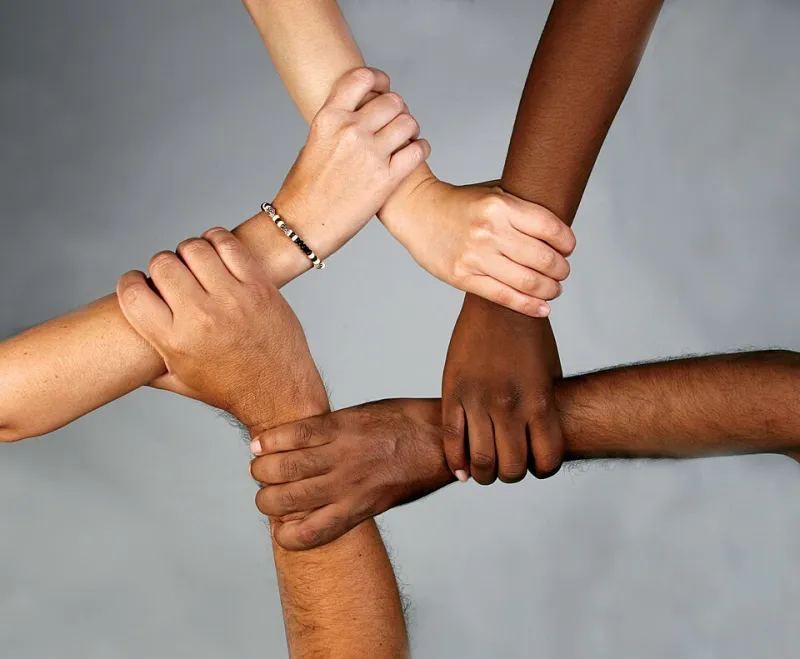
Invisible Patients: How Paywalled Research and Closed Trial Registries Are Shutting Marginalized Americans Out of Lifesaving Medicine
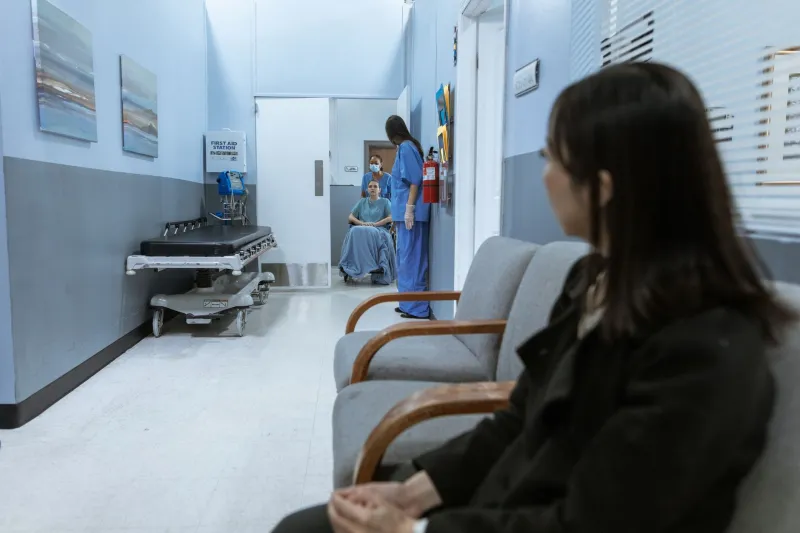
Somewhere in rural Appalachia, a woman with a rare autoimmune disorder sits across from her primary care physician — a doctor who, like many serving underserved communities, lacks institutional access to the specialized medical databases where cutting-edge treatment options are catalogued. She does not know that three separate clinical trials, each testing therapies that could meaningfully alter the course of her disease, are actively recruiting participants within driving distance of her home. Neither does her doctor. The information exists. It is simply not available to them.
This is not an isolated failure. It is a structural one.
A System Built for the Already Privileged
The architecture of clinical trial recruitment in the United States has, for decades, quietly favored those who are already well-positioned within the healthcare system. Major academic medical centers — concentrated overwhelmingly in wealthy metropolitan corridors — serve as the primary recruitment hubs for federally and privately funded trials. Their affiliated physicians receive direct notifications about new studies. Their patients are embedded in referral networks that funnel eligible individuals toward experimental treatments as a matter of routine.
For patients outside those networks, the pathway is far more treacherous. The federal government's ClinicalTrials.gov database is publicly accessible, but its interface was not designed with health literacy or technological access in mind. Navigating its search filters requires a level of medical vocabulary that most patients — regardless of education — simply do not possess. And that is the best-case scenario: it assumes the patient knows to look in the first place.
The deeper problem is upstream. The peer-reviewed literature that explains why a given trial matters, what prior research supports it, and which patient populations are most likely to benefit remains locked inside subscription-based journal platforms that charge hundreds of dollars per article. Community health workers, rural clinicians, and patient advocates operating without institutional library access cannot synthesize that context. Without it, even a publicly listed trial is effectively invisible.
Who Gets Left Behind — and Why It Matters
The consequences of this information asymmetry are not distributed equally. Research published in the Journal of the National Cancer Institute and elsewhere has documented persistent underrepresentation of Black, Hispanic, Native American, and low-income patients in clinical trials across virtually every disease category. The explanations are multiple — historical mistrust rooted in documented abuses, logistical burdens like transportation and lost wages, and language barriers — but information access is a foundational layer that receives far less attention than it deserves.
Consider oncology, where participation in trials can mean access to therapies that are not yet commercially available and may represent a patient's best remaining option. Studies have consistently shown that Black cancer patients are enrolled in trials at roughly half the rate of their white counterparts, even after controlling for disease stage and geography. Hispanic patients face similar disparities. When researchers have investigated the causes, inadequate outreach and patients' lack of awareness about trial availability rank among the most frequently cited factors.
This is a knowledge barrier problem. And it is killing people.
The Open-Access Intervention
A number of initiatives are beginning to challenge this status quo — not by working around the existing system, but by demanding that it become genuinely public.
The nonprofit organization Antidote, along with platforms like ResearchMatch and EmPOWER, have developed more accessible trial-matching tools designed for patients rather than clinicians. These platforms use plain-language descriptions, multilingual interfaces, and simplified eligibility screeners to connect individuals with studies they would otherwise never encounter. Early data from ResearchMatch, which was developed with support from the National Institutes of Health, suggests that its user base skews more demographically diverse than traditional trial recruitment pipelines — a meaningful signal that accessibility improvements translate into representation improvements.
At the policy level, advocates within the open-access movement have increasingly argued that trial result summaries and recruitment materials should be subject to mandatory open publication requirements, independent of the journals in which associated research appears. The NIH's 2023 Data Management and Sharing Policy represents a step in this direction, requiring that federally funded researchers submit data-sharing plans — but enforcement remains inconsistent, and the policy does not directly address the journal paywall problem that limits clinicians' and patients' ability to contextualize trial opportunities.
Communities Organizing for Transparency
Perhaps the most instructive developments are happening not in Washington or in academic publishing offices, but at the community level.
In Memphis, Tennessee, a coalition of Black church congregations and community health organizations has partnered with local researchers to create a neighborhood-level trial notification network. Trained community health navigators — trusted figures embedded in the communities they serve — receive plain-language summaries of active local trials and share them through existing social infrastructure: bulletin boards, congregation newsletters, and neighborhood text chains. The model sidesteps the institutional gatekeeping that has historically filtered trial information before it reaches underserved populations.
Similar efforts are underway in the Rio Grande Valley of Texas, where predominantly Hispanic communities have long been excluded from research pipelines despite bearing disproportionate burdens of conditions like Type 2 diabetes and cardiovascular disease. Local advocates there have explicitly framed their work as a demand for informational equity — arguing that access to research participation is not a courtesy but a right.
These grassroots networks are effective precisely because they recognize something the formal system has been slow to acknowledge: information does not become accessible simply by being technically available. It becomes accessible when it is translated, distributed through trusted channels, and contextualized for the communities it is meant to serve.
The Structural Reform the Moment Demands
Incremental improvements in trial-matching interfaces and community outreach programs are valuable, but they should not obscure the need for systemic change. As long as the foundational research literature that informs clinical trial design and recruitment remains commercially gated, the knowledge gap will persist — and marginalized communities will continue to bear its costs most severely.
A genuinely open science ecosystem would require that all federally funded trial data, recruitment materials, and supporting literature be freely and immediately accessible to the public. It would invest in plain-language translation infrastructure. It would measure trial diversity not as an afterthought but as a primary research outcome. And it would hold institutions accountable for the demographic composition of their study populations in the same way they are held accountable for methodological rigor.
The patients who are currently invisible to this system did not opt out of it. They were never meaningfully invited in. Correcting that requires more than better search filters — it requires a fundamental rethinking of who scientific knowledge is for, and who bears the obligation to ensure it reaches everyone.
At Knowledge Barrier-Less Press, we believe the answer to that last question is unambiguous. Science funded by the public belongs to the public — all of it, without exception, and without a paywall standing between a patient and the treatment that might save her life.