State by State, the Open Access Movement Is Winning: What Three Trailblazers Can Teach the Rest of America
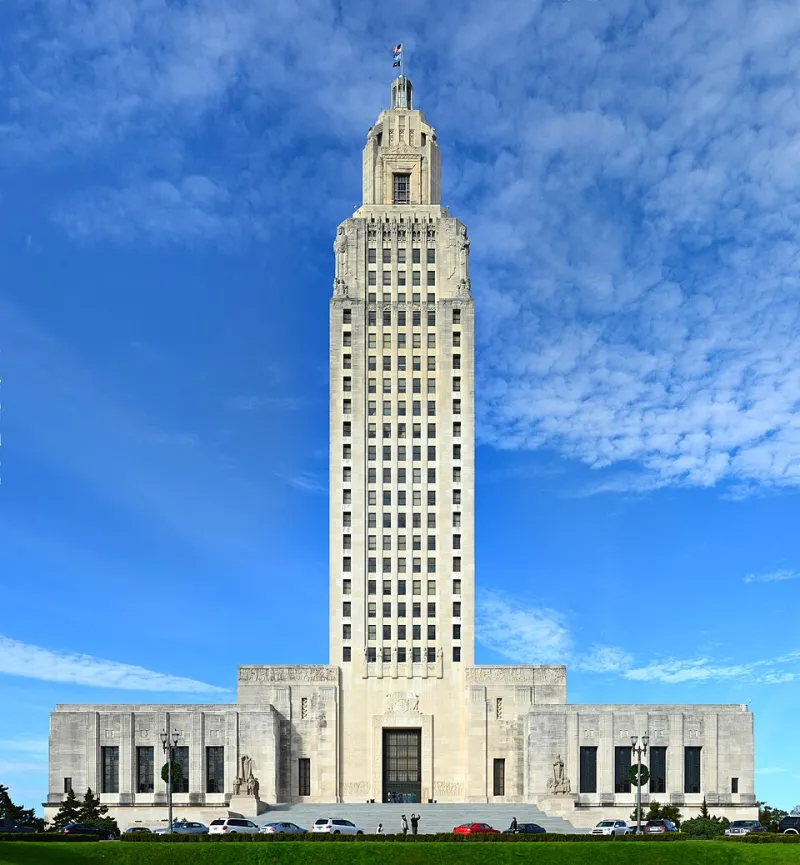
Photo: Chrismiceli, CC0, via Wikimedia Commons
A Federal Floor, and the States That Built Higher
In August 2022, the White House Office of Science and Technology Policy issued a memorandum directing all federal agencies to eliminate the twelve-month embargo that had long delayed public access to federally funded research. It was a landmark moment. It was also, by design, a floor — a minimum standard that left considerable room for states to go further.
Three states have done exactly that. California, Illinois, and New York have each enacted or substantially advanced policies requiring that research conducted with state taxpayer dollars be made freely and immediately available to the public. Their approaches differ in scope and mechanism, but the underlying conviction is identical: when citizens fund science, citizens deserve to read it.
The results of these early experiments deserve far wider attention than they have received.
California: Building Open Access Into the Funding Contract
California's approach is perhaps the most structurally ambitious. Under legislation advanced through the state legislature and implemented through the California Digital Library system, researchers receiving funding from state agencies are required to deposit their peer-reviewed manuscripts into an open repository within a defined period of publication — in most cases, immediately upon acceptance.
The University of California system, which administers a significant share of state research funding, has gone further still. Following a highly publicized dispute with Elsevier — one of the world's largest academic publishers — UC severed its licensing agreement and negotiated a new model under which UC-authored research is published open access by default, with costs covered at the institutional rather than the individual researcher level.
The public health implications have been measurable. California's network of community health centers, many of which serve low-income and uninsured patients in agricultural regions and urban cores, reported in a 2023 survey that increased access to current clinical research had meaningfully influenced treatment protocols for conditions including Type 2 diabetes management and post-COVID respiratory complications. Clinicians at these centers do not have the institutional affiliations that grant access to subscription journals. Open access, for them, is not an abstraction. It is the difference between practicing evidence-based medicine and practicing medicine in an information vacuum.
Illinois: The Economic Development Argument
Illinois has framed its open access push partly around an argument that tends to resonate across the political spectrum: economic competitiveness.
State legislators and research advocates successfully argued that locking publicly funded findings behind paywalls effectively subsidizes the commercial publishing industry at the expense of Illinois-based businesses, startups, and entrepreneurs who could otherwise draw on that research to develop new products and services. A small biotechnology firm in Peoria or a medical device startup in Evanston should not have to pay a foreign publishing conglomerate for access to research their own tax dollars funded.
Illinois's open access provisions, embedded in state research funding guidelines, have been credited by the Illinois Science and Technology Coalition with contributing to a measurable uptick in patent applications and licensing agreements tied to state-funded university research. When knowledge flows freely, it compounds. Discoveries build on discoveries. The economic case for open access, in Illinois, is no longer theoretical.
The state has also invested in public-facing research portals — plain-language summaries designed to make findings accessible not just to other researchers but to the general public, policymakers, and journalists. This layer of accessibility addresses a critique that open access advocates sometimes overlook: removing a paywall does not automatically make a dense academic paper comprehensible to a non-specialist. Illinois is attempting to solve both problems simultaneously.
New York: Centering Health Equity
New York's open access framework is the most explicitly rooted in health equity considerations. Following advocacy from a coalition of public health organizations, medical professionals, and patient advocacy groups, the state enacted provisions requiring that health-related research funded through state agencies be publicly available without delay.
The impetus was, in part, the COVID-19 pandemic. New York was the early epicenter of the American outbreak, and researchers, public health officials, and frontline clinicians described the experience of trying to access rapidly evolving clinical evidence through a patchwork of institutional subscriptions as genuinely dangerous. Critical findings about treatment protocols, ventilator management, and transmission dynamics were appearing in preprint servers before they reached peer-reviewed journals — and even then, access was uneven.
New York's post-pandemic open access legislation was designed to ensure that such a scenario could not recur. Publicly funded health research must now be deposited in accessible repositories, and the state has allocated resources to support its public hospital and clinic system in building the infrastructure to retrieve and use that research effectively.
Early assessments suggest the policy is functioning as intended. A review conducted by the New York State Health Foundation found that rural hospitals — historically the most disadvantaged when it comes to subscription access — had increased their engagement with current clinical literature by a statistically significant margin in the two years following implementation.
What Every Other State Can Do Right Now
The experiences of California, Illinois, and New York are instructive not because they represent a single replicable model but because they demonstrate that multiple pathways to open access policy exist. States with strong research university systems can leverage institutional relationships. States with manufacturing or technology economies can lead with the economic competitiveness argument. States facing persistent rural health disparities can center equity.
For advocates and concerned citizens, the roadmap is reasonably clear. State legislative committees that oversee higher education and research funding are the natural points of entry. Many states already have open access resolutions or pilot programs that could be strengthened with constituent pressure. Professional associations — particularly medical societies, library associations, and public health organizations — have proven to be effective coalition partners in all three trailblazer states.
The argument is straightforward enough to make at a town hall, a school board meeting, or in a letter to a state representative: research funded by Texans, Ohioans, Floridians, or Arizonans should be readable by Texans, Ohioans, Floridians, and Arizonans. Not because it would be convenient, but because it is already theirs.
The Barrier Is a Policy Choice
The paywalls that separate the public from publicly funded science did not emerge from nature. They were constructed through decades of policy decisions, publishing contracts, and institutional inertia. They can be dismantled through the same mechanisms that built them: deliberate, sustained policy action.
Three states have begun that work in earnest. The evidence they are generating — in improved health outcomes, stronger innovation economies, and more equitable access to knowledge — belongs to all of us. The question is whether the remaining forty-seven states are paying attention.